Christmas road trip Cardwell shenanigans and early morning rainbows.
Traveling to my sister's house in Mareeba for Christmas, starting from Mackay, I had opted to split the journey with a stopover in Cardwell. Cardwell is renowned as the gateway to Hinchinbrook Island, Australia's largest island national park.
After spending seven hours on the road, I stayed overnight at the Marine Hotel. I was eager for a refreshing shower upon arrival. When I approached the reception, uncertain of what to expect, I was informed that all accommodations had been upgraded. Upon entering my room, I found it to be lovely, spacious, and equipped with excellent amenities.
Now it's time to head to the bar for a coldie and watch Travis Head score a remarkable century on his home ground, his fourth consecutive century in tests at Adelaide Oval. Carey, remaining unbeaten on 52, added a half-century to his first innings century as the Australians finished at 4-271, leading England by 356 runs, awsome to watch the poms get a touch-up with many patrons cheering on the two.
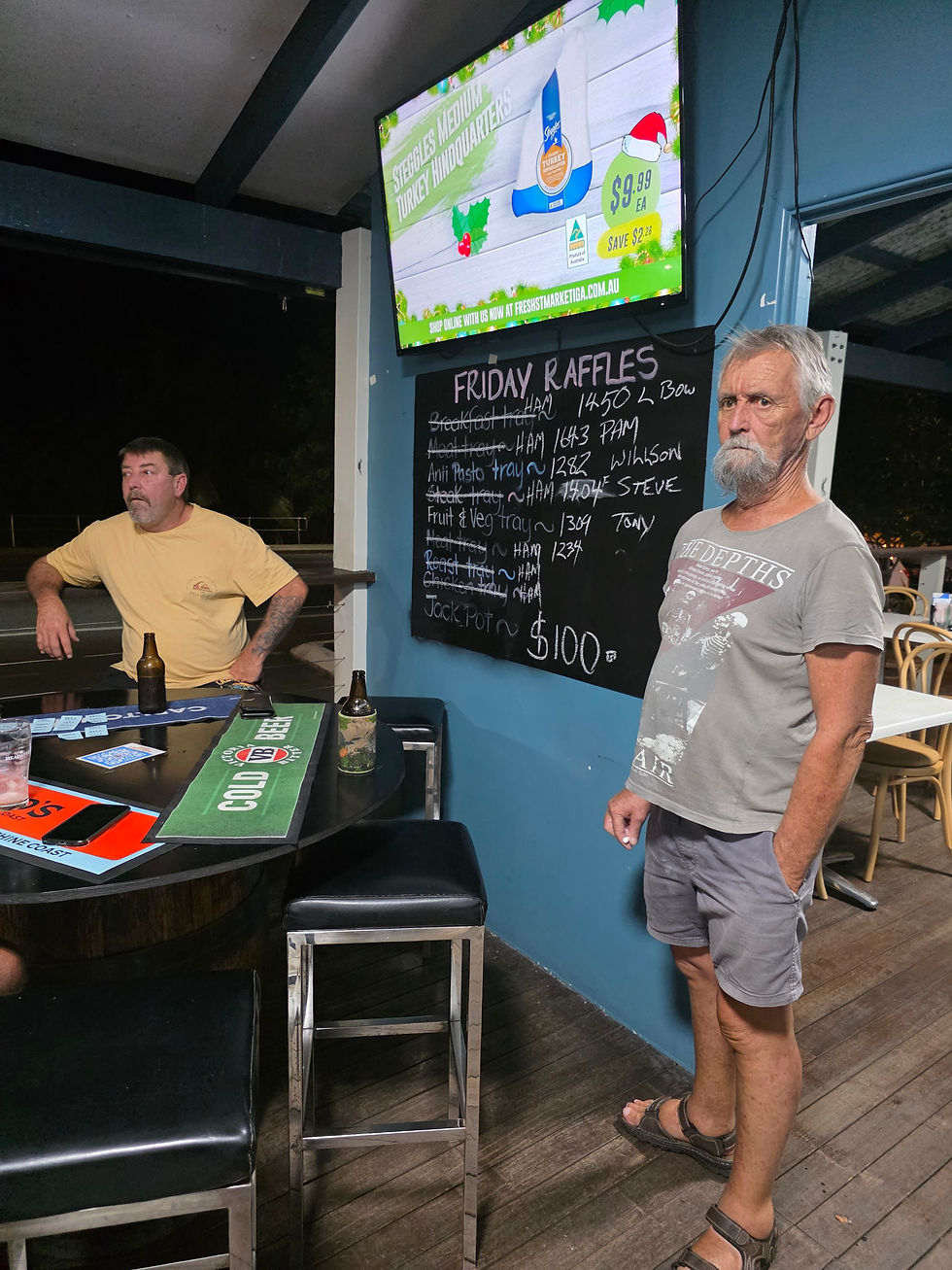
Last but not least for the evening I ended up taking home the fruit and vegetable tray in the hotel raffle that was all the greens and fruit required for the upcoming Christmas festivities a great night was had by all.
Good Morning.
Waking to the soft stream of early morning light through my window, I heard a distinctive noise. Could it be? I hurried out of bed, and anyone who knows me is aware that I get excited easily. I quickly threw on some clothes, grabbed my camera and tripod, and rushed out the door!
Following the sounds I came to the school ground oval and there they were three pairs of adult Rainbow bee-eaters and two juvenile birds now I was super excited.
I watched without a sense of time, it might have been five minutes or an hour, observing their favourite roosts and seeking a good composition of flora to enhance the image. I then noticed a flame tree they were using as an insect dispatch area, and the branch had everything I needed for a great image, then adjustment for light and it was game on.
Time disappeared in a flash, and suddenly it was gone. I glanced at my phone, it was twenty to ten. Alright, I need to return to the accommodation and check out. Adventure awaits!

Bright Colours and Distinctive Features
Rainbow bee-eaters get their name from their dazzling plumage. Their feathers display a mix of green, blue, yellow, and red shades that seem almost painted. The green covers most of their body, while the throat shines with a bright yellow patch bordered by a black line. Their long, slender tail feathers end in two elongated streamers that add to their graceful silhouette.
These birds measure about 20 to 25 centimeters in length. Their slender, curved beaks are perfectly designed for catching insects mid-flight. The colors not only attract mates but also help them blend into the leafy environments where they hunt.
Hunting Skills and Diet
Rainbow bee-eaters are expert aerial hunters. They primarily feed on flying insects, especially bees, wasps, and dragonflies. Their name reflects this diet, but they do not just catch any insect—they have a particular skill in handling stinging prey.
When a bee-eater catches a bee or March fly, it returns to a perch and carefully removes the sting by repeatedly hitting the insect against the branch. This behavior ensures the bird avoids getting stung while enjoying a nutritious meal. Their sharp eyesight and quick reflexes allow them to spot and capture insects in mid-air with remarkable precision.
Social Behavior and Nesting
These birds are social creatures often seen in small groups or pairs. They communicate with soft, melodious calls and engage in cooperative behaviors like group hunting and communal roosting.
Rainbow bee-eaters nest in burrows dug into sandy banks or flat ground. Both males and females participate in digging tunnels that can be up to a meter long. At the end of the tunnel, they create a nesting chamber where the female lays about 4 to 6 eggs. Both parents share the responsibility of incubating the eggs and feeding the chicks once they hatch.
The nesting burrows provide protection from predators and harsh weather. This underground nesting habit is unusual among birds and adds to the uniqueness of their life cycle.
Migration and Habitat
Rainbow bee-eaters are found mainly in northern and eastern Australia, as well as parts of New Guinea and Indonesia. They prefer open woodlands, riverbanks, and farmlands where insects are abundant.
In some regions, these birds migrate seasonally. For example, in southern Australia, they arrive in spring and leave by autumn. Migration allows them to follow insect populations and favorable weather conditions.
Their adaptability to different habitats and migratory behavior help maintain healthy insect populations and contribute to the balance of local ecosystems.
Importance in the Ecosystem
Rainbow bee-eaters play a vital role in controlling insect populations. By feeding on bees, wasps, and other flying insects, they help reduce pests that can damage crops or spread diseases.
Their presence also indicates a healthy environment. Because they rely on clean habitats with abundant insect life, a decline in rainbow bee-eater numbers can signal ecological problems such as pesticide overuse or habitat loss.
Bird watchers and conservationists often use rainbow bee-eaters as a species to monitor ecosystem health. Protecting their habitats benefits many other plants and animals in the same areas.
How to Spot and Appreciate Rainbow Bee-Eaters
If you want to see these colorful birds, look for them near water sources or open fields during warm months. Early morning or late afternoon are the best times to observe their hunting flights.
Bring binoculars and a camera with a zoom lens to capture their bright colors and swift movements. Remember to keep a respectful distance to avoid disturbing their natural behavior.
Joining local birdwatching groups or guided tours can increase your chances of spotting rainbow bee-eaters and learning more about their habits from experts.


Comments